
Moving to a new country is a massive undertaking. Between finding a place to live, getting the kids settled in school, and figuring out how to get to work, there is a lot on your plate. For many of our neighbors in the African immigrant and refugee community here in Nebraska, there is an extra layer of complexity: navigating everything in a mix of French and English.
At African Immigrant Family Services (AIFS), we see it every day. You might be fluent in French and learning English, or perhaps you’re balancing both while also speaking Swahili or Arabic. When you’re trying to access healthcare, talk to your child’s teacher, or apply for social services, small linguistic misunderstandings can lead to big headaches.
We want to make your journey smoother. That’s why we’ve put together this guide on the seven most common mistakes people make when navigating services in French and English, and how you can avoid them.
1. The "Literal Translation" Trap
One of the most common hurdles is trying to translate concepts word-for-word. French and English may share some roots, but the way we describe social services and legal systems is very different.
For example, if you translate a specific medical or legal term literally from French to English, a provider might completely misunderstand your needs. In the U.S. healthcare system, terms are very specific. If you tell a doctor you have a "malaise," which in French can mean a general feeling of being unwell or a fainting spell, an English-speaking doctor might interpret it much differently than you intended.
The Fix: Don't worry about being a human dictionary. Instead of searching for the "perfect" word, describe the situation or the feeling in detail. If you are struggling to explain a complex medical or legal issue, reach out to us at AIFS. Our bilingual staff can help ensure your message doesn't get lost in translation.
2. Falling for "False Friends" (Faux Amis)
In linguistics, "false friends" are words that look or sound the same in two languages but have totally different meanings. When you are stressed at a government office or a clinic, these words can really trip you up.
Take the word actuellement in French. It means "currently" or "now." But in English, actually means "in fact" or "really." If a caseworker asks when you moved, and you say, "Actually, I moved last week," thinking you are saying "Currently, I moved last week," it creates confusion.
Another big one in the world of social services is assister. In French, assister à means to attend (like a meeting or a class). In English, assist means to help. If you tell a school counselor you want to "assist the meeting," they might think you are offering to run the meeting rather than just show up for it!

3. Using Your Children as Interpreters
This is a mistake we see all the time, and we totally understand why it happens. Children often pick up English faster than adults because they are immersed in it at school every day. It feels natural to bring your teenager along to the doctor or the DHHS office to help you talk.
However, this is risky for a few reasons. First, medical and legal terminology is hard even for native English speakers! Your child might not know the technical terms in either language. Second, it shifts the family dynamic in a way that can be stressful for the child. They shouldn't have to carry the weight of your medical results or financial discussions.
The Fix: Most public services in Nebraska are required by law to provide an interpreter if you ask for one. Always ask for a professional interpreter. If you’re feeling overwhelmed, visit our site to see how our human services consultants can support you during these appointments.
4. Misunderstanding the "Formality" Gap
In French, the distinction between tu and vous is a cornerstone of respect. When you are speaking to a doctor, a teacher, or a government official, you naturally use the formal vous.
In American English, things are a bit more casual. You might find a doctor introducing themselves by their first name, or a caseworker being very informal. A common mistake is thinking that because someone is being informal, the situation isn't serious, or conversely, feeling offended that they aren't using formal titles.
On the flip side, some immigrants might use English phrasing that sounds too blunt or demanding because they are trying to translate the directness of formal French into English.
The Fix: Focus on the "Social Graces." A simple "Please" and "Thank you" go a long way in English to maintain respect, even if the "tu/vous" distinction isn't there. If you’re unsure how to phrase a request to a school or a landlord, we can help you draft those communications.

5. Navigating the School System Without a Guide
The U.S. school system is full of acronyms that don't always have a direct equivalent in the French-speaking systems of West or Central Africa. Terms like "IEP" (Individualized Education Program), "ESL" (English as a Second Language), or "Parent-Teacher Conferences" can be confusing.
A common mistake is assuming that "no news is good news" from the school. In many African countries, you only go to the school if there is a problem. In Nebraska, schools expect parents to be very involved. If you don't show up for meetings because of a language barrier, the school might think you aren't interested in your child's education.
The Fix: Check out our Youth Leadership Program and our school support services. We help bridge the gap between African immigrant families and Nebraska schools. You can find more information on our events page about upcoming workshops for parents.
6. Confusion Over Healthcare Documentation
Healthcare is perhaps the most stressful place to navigate a language barrier. Between insurance forms, consent papers, and "Privacy Acts" (HIPAA), the paperwork is a mountain.
A mistake we often see is "The Silent Agreement." This is when a person nods their head "yes" because they understand the words the doctor is saying, but they don't actually understand the system or the treatment plan. For example, understanding the word "prescription" (which is ordonnance in French) is one thing, but understanding "deductibles" or "co-pays" is another.
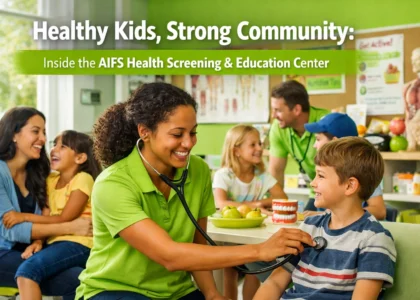
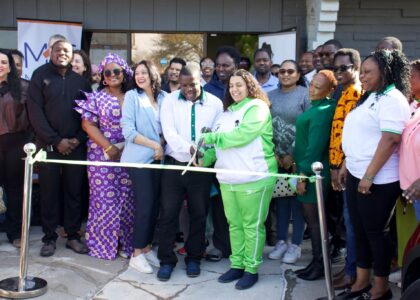
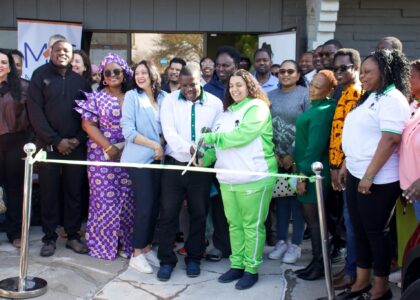
The Fix: We recently opened a Health Screenings & Education Center to specifically address these gaps. We provide education in French and English so you actually understand your health, not just the words on the paper.

7. Waiting Too Long to Ask for Help
This is the biggest mistake of all. Many families wait until they receive an eviction notice, a school suspension, or a massive medical bill before they reach out for help. Often, this is because they didn't know how to ask for help in English or weren't sure if French-speaking services were available.
At AIFS, we want you to know that you don't have to do this alone. Whether you are navigating the legal system, looking for health resources, or needing help with basic needs, we are here.
The Fix: Reach out early! Even if you think your English is "good enough," having a bilingual advocate can ensure that nothing is missed. You can even support our mission to provide these bilingual services by visiting our donation form.
Why AIFS is Your Best Partner
At African Immigrant Family Services, we aren't just a service provider; we are your neighbors. We understand the cultural nuances that a standard Google translation misses. We know that being an immigrant in Nebraska comes with unique challenges, but also incredible opportunities.
We provide:
- Bilingual support in French and English (and more!).
- Guidance on healthcare through our Health Screenings & Education Center.
- Youth programs to keep the next generation on the path to success.
- Advocacy in the social service system.

Join Our Community
If you found this guide helpful, stay connected with us! We are constantly hosting events and workshops designed to help our community thrive. Check out our main page for the latest updates.
Navigating two languages and a new country is hard work, but you’ve already done the hardest part by getting here. Let us help you with the rest. Whether you want to volunteer, need services, or want to sponsor an event, your involvement makes our community stronger.
Remember: language should be a bridge, not a barrier. See you at AIFS!